
- Tolerance and Ra are set by the number of skim cuts, not just the wire
- Rough + one skim = good accuracy; more skims = finer Ra and tighter size
- Taper cutting trades accuracy for angle — state it or expect it straight
- Recast layer and white layer are real, and can be removed by finishing
Accuracy is bought with skim cuts
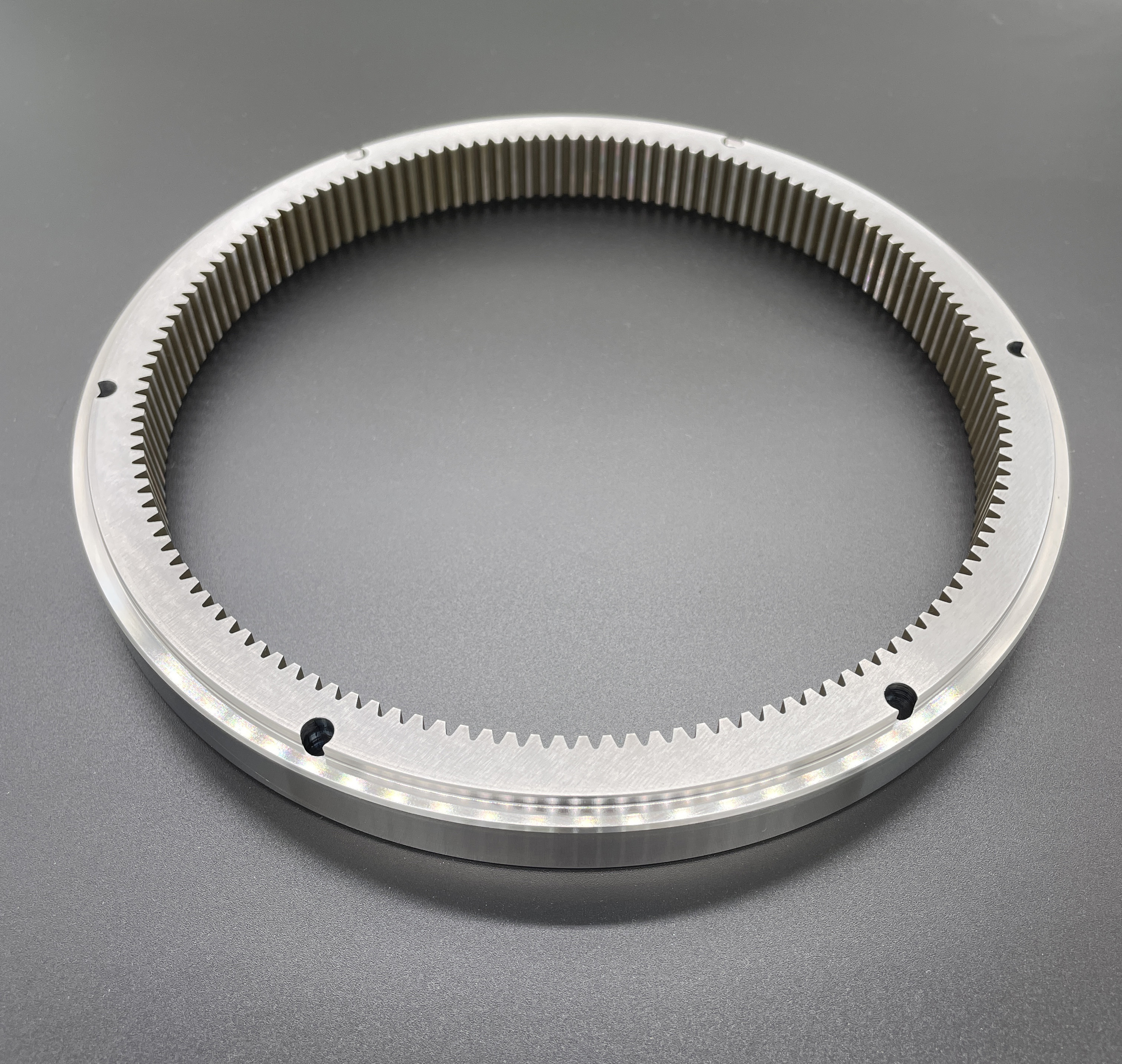
A single rough pass erodes fast but leaves a rough, slightly oversize surface. Each skim pass re-cuts the same path with lower power, shaving toward the final size and smoothing the surface. This is why the same machine can hold ±0.002 mm or ±0.01 mm — the difference is how many passes you pay for.
Surface finish, in real terms

Wire EDM leaves a matte, layered surface with a Ra that falls with each skim cut. A rough pass might leave Ra 3.0 µm and up; skim cuts take it below Ra 1.0 µm. The finish is non-directional and burr-free, but it is not a polished surface — if the part needs a mirror finish, plan a post-process.
Taper and the vertical edge
Wire EDM normally cuts a straight vertical wall, but it can also cut a taper. Taper changes the effective accuracy because the wire is deflected across the thickness, so a tapered slot is looser than a straight one. If you need a taper, call it out; if you need a straight wall, state the perpendicularity.
The recast layer, and why it matters
The discharge melts a microscopic layer at the cut surface, which resolidifies as a 'recast' or 'white' layer. On most parts it is irrelevant; on fatigue-critical or medical surfaces it can be a stress raiser. We can remove or limit it with finish passes or a follow-on process, and we will tell you when it matters for your part, rather than discovering it in testing.
Reading the numbers on a report
A wire-EDM inspection report should show size on the critical features, perpendicularity or taper, and Ra. If a shop hands you only a dimensional sheet with no finish and no taper data, ask — the surface and the wall are half the value of the process.
What Ra can wire EDM achieve?
A rough pass is above Ra 3 µm; multiple skim cuts bring it below Ra 1 µm. State the Ra and the tolerance together, because they are bought with the same skim passes.
Does wire EDM leave burrs?
No — the process erodes rather than shears, so there is no burr. Sharp edges may still want a light break for handling, but the cut itself is clean.
State the size, the Ra and the taper you need, and we will quote the skim cuts that buy them.
Send a 3D file to [email protected] · +86 13126536955
Continue reading: Wire EDM Machining Services · Wire EDM vs CNC Milling · Machining Shop
Standards referenced on this page
- ASTM B209/B209M-21 — Standard Specification for Aluminum-Alloy Sheet and Plate
- ISO 9001 — Quality management systems — Requirements
- ASTM E8/E8M-21 — Standard Test Methods for Tension Testing of Metallic Materials