
- Sodick wire EDM, tolerance ±0.002 mm
- Cuts hardened steel, carbide and titanium without tool pressure
- Sharp internal corners and sub-millimetre slots a mill cannot reach
- Pairs with precision grinding for a hardened-part finishing chain
What wire EDM actually does
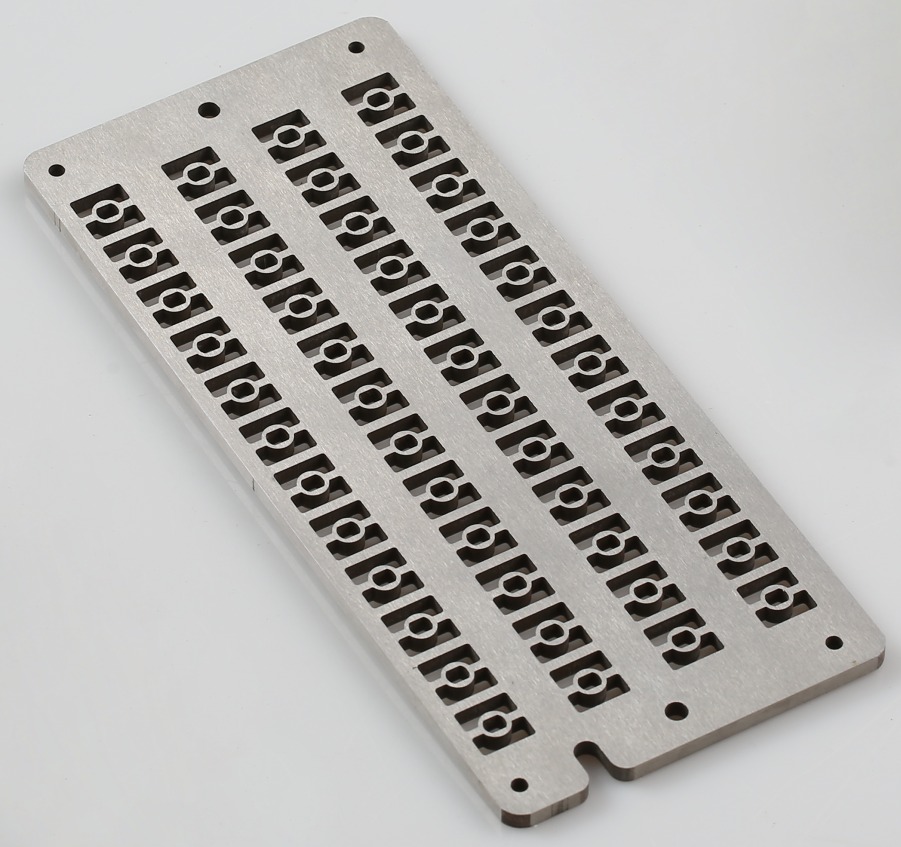
A fine, continuously travelling wire carries an electrical discharge that erodes the material, guided by a CNC path. Because the wire never touches the part, there is no cutting force, which is why a thin wall or a part already hardened to HRC 50+ can be cut without bending, and why a square internal corner can be produced that a rotating end mill can never reach.
The three geometries a mill cannot reach

1. A sharp internal corner — a mill leaves a radius equal to the tool; the wire leaves a corner limited only by the spark gap and the wire diameter. 2. A sub-millimetre slot or a thin fin that would deflect under any cutting load. 3. A precision feature on a part that is already hardened — re-cutting hardened stock with a mill destroys tools; the wire does not care about hardness.
When not to use wire EDM
Wire EDM is slow and it only cuts conductive materials. For bulk stock removal, a mill is far faster; for a simple through-hole, drilling is cheaper; for a non-conductive plastic, EDM is out entirely. The honest answer is usually a hybrid: rough with a mill, then finish the precision feature with the wire.
What we run
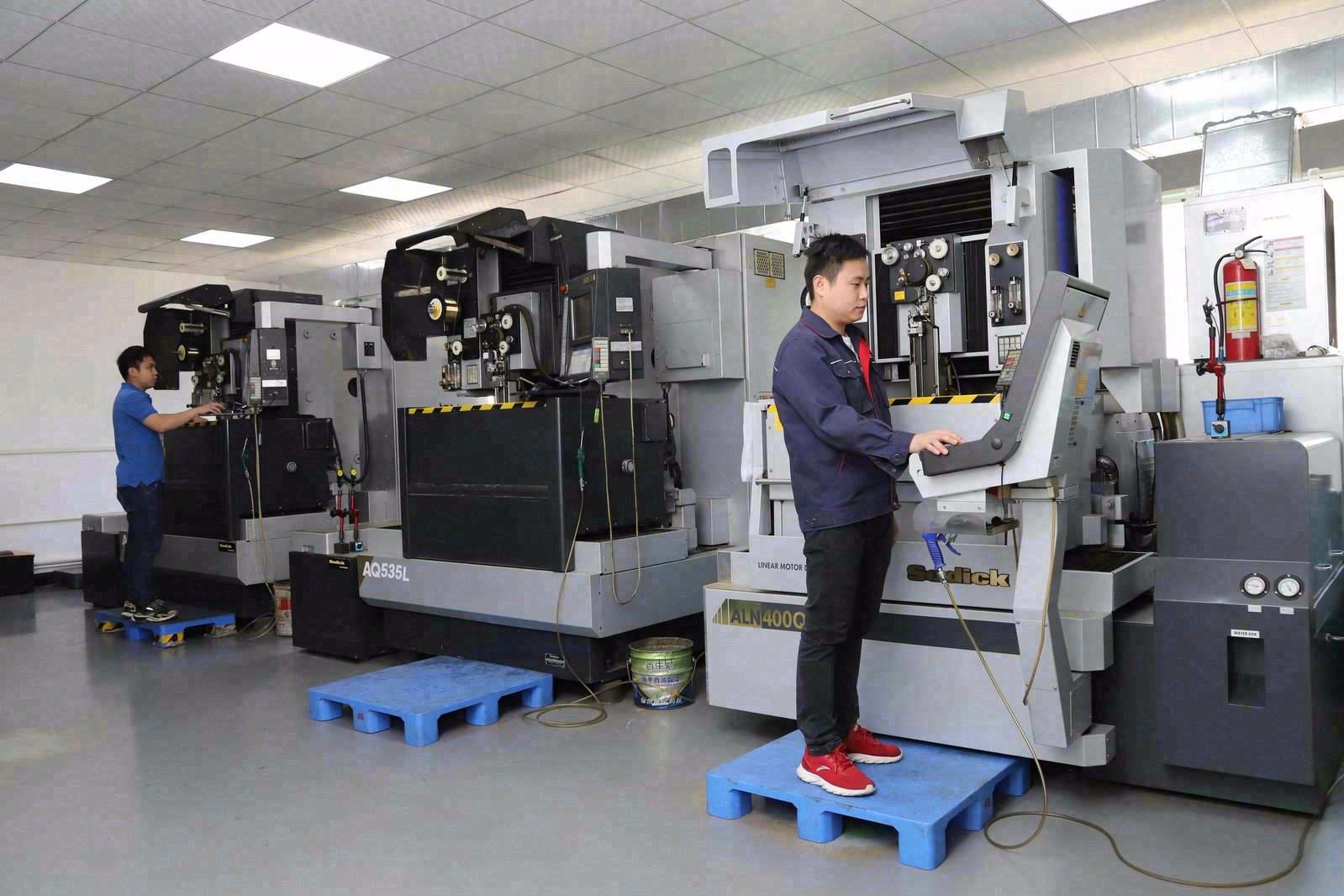
Sodick wire EDM, backed by precision grinding, so a hardened part can move from EDM to grind without leaving the quality system. Turning holds ±0.002 mm and precision grinding plus wire EDM hold ±0.002 mm — the numbers that matter for the sharp-corner, hardened, tight-slot work EDM exists for.
Materials and applications
Hardened tool steel, carbide, and titanium; die and mold inserts, precision slots and thin fins, and fine-tooth geometry. Applications cluster in tooling, medical-device mechanisms (non-implant), and precision instruments where a corner or a slot is the whole point of the part.
Can wire EDM cut hardened steel?
Yes, that is one of its main advantages. It cuts material up to HRC 60+ without tool pressure, which is why it is used on parts already heat-treated.
What is the smallest slot you can cut?
It depends on the wire diameter and the spark gap; sub-millimetre slots are routine. Send the drawing and we will state the achievable geometry, not a brochure number.
Send the geometry a mill cannot reach — sharp corners, thin fins, hardened stock.
Send a 3D file to [email protected] · +86 13126536955
Continue reading: Machining's Services · Machining Shop · Wire EDM vs CNC Milling
Standards referenced on this page
- ASTM B348/B348M-21 — Standard Specification for Titanium and Titanium Alloy Bars and Billets
- ISO 9001 — Quality management systems — Requirements
- ASTM E8/E8M-21 — Standard Test Methods for Tension Testing of Metallic Materials