
Every machining order starts with a leap of trust across a distance, and the trust is repaid in layers of evidence. The first layer is commercial: who the supplier actually is, whether the payee matches the certificate, and whether the machines they claim are real. The second is process: what the machine list holds, how incoming material is verified, and how inspection data is produced. The third is proof: the first-article report that shows the process holding the drawing on a real part. A shop that can answer each layer with documents rather than assurances is a shop whose first lot is worth trusting. This guide orders the checks so you run them in the right sequence and pay in the right order.
- Verify in layers: commercial identity first, then the machine floor, then the material story, then the first article.
- Identity before money: payee, quotation entity, and certificate scope should all name one company.
- Machine list before promises: the equipment a shop runs predicts the parts it can actually hold.
- Material needs a trail: certificates with heat numbers, verified against the stock before it is cut.
- First article is the proof: the process is only a claim until a part is measured against the drawing.
Why should a buyer verify a machining supplier in layers?
A single check proves almost nothing, because a supplier can fail in any one layer while passing the others. A reseller can show beautiful certificates; a real manufacturer can have sloppy paperwork; a competent shop can be bad at communication. The layers together are what separate the trustworthy from the plausible.
The layering also gives the relationship a vocabulary: when something goes wrong later, both sides can say which layer failed, and the repair is targeted rather than general. The same vocabulary belongs in the supplier agreement, so a dispute about a batch is framed as a layer question and settled where the evidence lives and the evidence decides.
The layers also decide the order of your own exposure. The commercial layer decides whether your money reaches the company you think it does; the process layer decides whether the parts will hold; the first article decides whether the first lot should ship. Paying after each layer is verified is how the deposit stays aligned with the evidence.
Ordering the checks matters because the cheap ones filter the field before the expensive ones. Verifying the identity and the machine list costs an afternoon of emails and kills most candidates; the first article costs real money and belongs only on the survivors.
The sequence also protects the supplier’s time: a buyer who has already verified the identity and the machines can send a drawing worth quoting, while one who skips the layers wastes two afternoons on a part neither shop will win. And the layers run on every new supplier, because the habit is cheap and the drift starts the moment it is skipped.
Which commercial checks should run before any money moves?
The commercial layer answers three questions: who is quoting, who will receive the payment, and who holds the certificates. The payee on the invoice should match the company on the quotation, and the certificate scope should name the same legal entity, because mismatches here are the classic shape of a front.
Ask for the registration details and compare them with the certificate scope, the bank account, and the address on the quotation. Then confirm the floor exists with a live video walk-through - machines, measuring equipment, and a sample part in frame - because a manufacturer can show its floor and a trading desk cannot.
Ask the walk-through to include the measuring bench and one live reading, because the bench is the part of the floor that decides whether your report will be real, and a bench that cannot be shown is a report that should not be believed.
The checks are fast and free, which is exactly why they should be automatic. A supplier that hesitates on any of them has answered the first layer, and the answer is usually not the one you wanted.
Keep a short file per candidate as the layers accumulate: the registration, the video stills, the certificate scope, and the quote all belong in one place for the moment you compare two suppliers.
How do you read a machine list to predict what a shop can hold?
The machine list is the process layer’s first document. Milling machines, lathes, and the axis count tell you the range of geometry a shop can cut; the metrology bench tells you what it can prove. A list that names the equipment is a list that can be checked against your part.
Ask whether the shop runs the cutting and the inspection on the same site, because a shop that outsources its measuring has split the evidence trail between two companies, and the trail is weaker for it. Ask who owns the calibration of the outsourced bench, because ownership of the instrument is ownership of the number.
Ask which machine would run your part and why. The answer shows whether the shop matches the machine to the drawing or the drawing to whatever is free, and the two habits produce very different first articles.
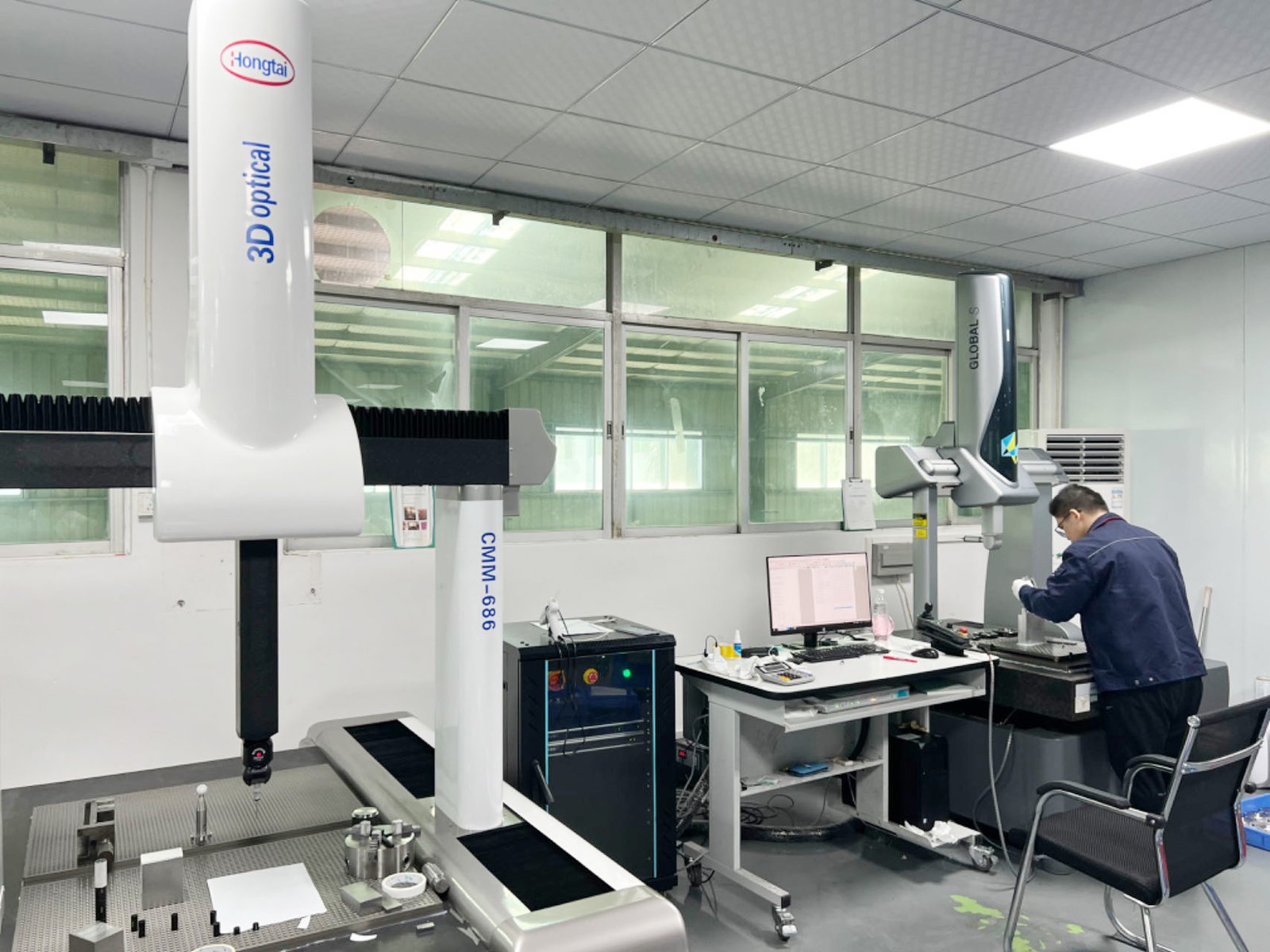
The measuring equipment matters as much as the cutting equipment. A shop that holds a CMM, surface testers, and calibrated gauges can produce the evidence your report needs; one that inspects by eye cannot, whatever its machine list says.
Why does the material story sit at the center of the process layer?
Material is the layer where substitution happens quietly. A drawing that names 6061-T6 can receive 6061-T651 or a lookalike grade, and the difference rarely shows on the surface. The checks that stop it are the certificate with a heat number, the XRF verification of the incoming stock, and the lot link that ties the bar to the parts.
Substitution is not always malicious - a shop may reach for a similar grade when the specified one is out of stock - which is exactly why the drawing note and the certificate have to agree before the bar is ordered, and the note belongs on the purchase order too.
Ask how the shop links the heat number to the lot that ships. A certificate per heat with the parts traced to it is a paper trail; a generic type certificate is a gesture. The first-article report should carry the heat number so the measured part is the alloy that was ordered.
The material story also decides the schedule. Stocked grades move in days; special alloys and unusual sizes add procurement weeks, and the quotation that names the source and its availability is the quotation you can actually plan against.
Where the material is expensive or the heat matters, ask for the certificate before the order rather than with the shipment, so the quote prices the alloy you specified and the stock is committed against the right heat.
What should the first-article gate prove before production runs?
The first article is where the process layer meets the drawing. The shop machines a sample, measures every critical feature by the method the drawing implies, and sends the report for your approval before the run is released. Its purpose is to prove the process, not to describe a hope.
The report should map each reading to the feature on the drawing and name the instrument that took it. A first-article file that cannot be checked feature by feature is a first-article file that has not demonstrated anything.
The map should name the datum structure as well, because a feature measured against the wrong datum is a number that looks right and means nothing. First-article files that state their datums are files that can be trusted.
The gate has two halves and both belong to the schedule: the shop produces the report, and you approve it. Approving on the day the report arrives keeps the run moving; a week of review costs a week of production time, and no supplier can recover it.
Name a backup approver when the reviewer travels, and put the gate dates on the order. A gate that depends on one person is a gate that will fail, and the failure date is the one that was quoted.
Which documents should a machining lot carry to your dock?
The document package should be agreed before the order so it is planned rather than improvised: a certificate of conformance tied to the packing list, the dimensional report for the critical features, the material certificates for the heats in the lot, and a deviation record for anything that left nominal.
Format matters as much as content: a report that states the operator, the instrument, and the calibration date is evidence, and a generic page with no provenance is a form to be filled.
The dimensional report should carry the instrument, the operator, and the calibration date for every critical reading, because a number without provenance proves nothing. The calibration line is the one that tells you whether the rest can be trusted.
For a new part, the first-article report travels with the first lot and becomes the reference for later ones. For repeat lots, the evidence steps down to the criticals and a conformance line, with the stepping-down rule written into the order.
The package should also name the finish condition when one is specified, because plating and anodizing change the surface after the tool, and the report should say which surface it measured.
How should payment terms keep the deposit aligned with the evidence?
The terms that protect a first machining order tie the money to the evidence layers: a deposit to start the work, a release after the first article is approved, and the balance against the inspection data and the shipping documents. Each payment moves after a verifiable step, not after a promise.
Keep the payment schedule visible in the order so neither side negotiates it under the pressure of a shipment that is already late.
Full prepayment should end the conversation for a first order, because it removes the alignment between money and evidence. If a supplier cannot accept a deposit-and-release structure for an unproven relationship, the refusal is itself the answer.
The rework rule belongs in the terms before it is needed: whether a failed first article is reworked at the shop’s cost, accepted with a concession, or covered only for material consumed. Written before the failure, the rule is a process; written after, it is a negotiation under pressure.
State the deposit in relation to the material exposure as well, because a cheap bar order and a titanium order carry different risks, and a single percentage for both protects neither.
How do you scale a machining supplier from a first lot to a program?
Scaling follows the evidence, not the discount. The first lot with its full report proves the process; the second lot at a larger quantity confirms it repeats; the third demonstrates the documentation holds at volume. Each step is a check that the next step is earned.
- Pilot on the hardest part. If the first lot is the most difficult drawing you will send, the simpler parts follow with confidence.
- Compare reports across lots. Capability on the criticals should improve or hold, and drift should be visible early.
- Extend the terms as trust grows. The deposit can shrink and the release can loosen once the evidence has a history.
- Keep the document standard fixed. The report format that worked on the pilot is the format that should run for the whole program.
- Re-qualify on any change. A new material source, a new revision, or a long pause deserves a fresh first article.
A machining supplier that passes the commercial layer, demonstrates the process layer, and proves it on the first article is a supplier worth growing. The program scales when every step is earned by the evidence of the step before, and the buyer never pays for hope twice.
Re-run the layers when the program expands to a new material or a new process. The commercial layer rarely changes, the process layer should be re-confirmed, and the first article of the new configuration is the only proof that the expansion is real. The layers are a loop, and the loop is the relationship - and it is the loop that turns a first deposit into a standing program.
Frequently Asked Questions
What is the first thing to verify about a machining supplier?
The commercial identity: the payee on the invoice should match the company on the quotation and the certificates, and a live video walk-through should confirm the floor exists. Identity is the layer every other check depends on.
Why verify the machine list before any promises?
Because the equipment predicts the parts a shop can hold. A machine list that matches your geometry, together with the measuring equipment behind it, is the first evidence that the process layer is real.
How do I stop a silent material substitution?
Require a certificate with a heat number, ask how the incoming stock is verified against it - typically by XRF - and demand that the heat number ride with the first-article report and the lot.
What should the first article show?
A measurement of every critical feature by the method the drawing implies, mapped to the feature and named with its instrument. That is the proof that the process holds the drawing.
What documents should arrive with a machining lot?
A certificate of conformance, the dimensional report for the criticals, material certificates with heat numbers, and a deviation record. All should carry the drawing revision and the calibration dates.
What payment structure protects a first machining order?
A deposit to start, a release after the first-article approval, and the balance against the inspection data and shipping documents. Full prepayment removes the alignment between money and evidence.
How do I scale a supplier from a first lot to a program?
Pilot on the hardest part, compare the reports across lots, extend the terms only as the evidence grows, keep the document standard fixed, and re-qualify on any change to material or revision.
Want the evidence layers checked before you pay?
Send the drawing and ask for the machine list, the material story, and the first-article format before you commit. Contact the Machining team to run the checks in order.