
4 Axis Machining: Where a Rotary Fourth Axis Earns Its Keep
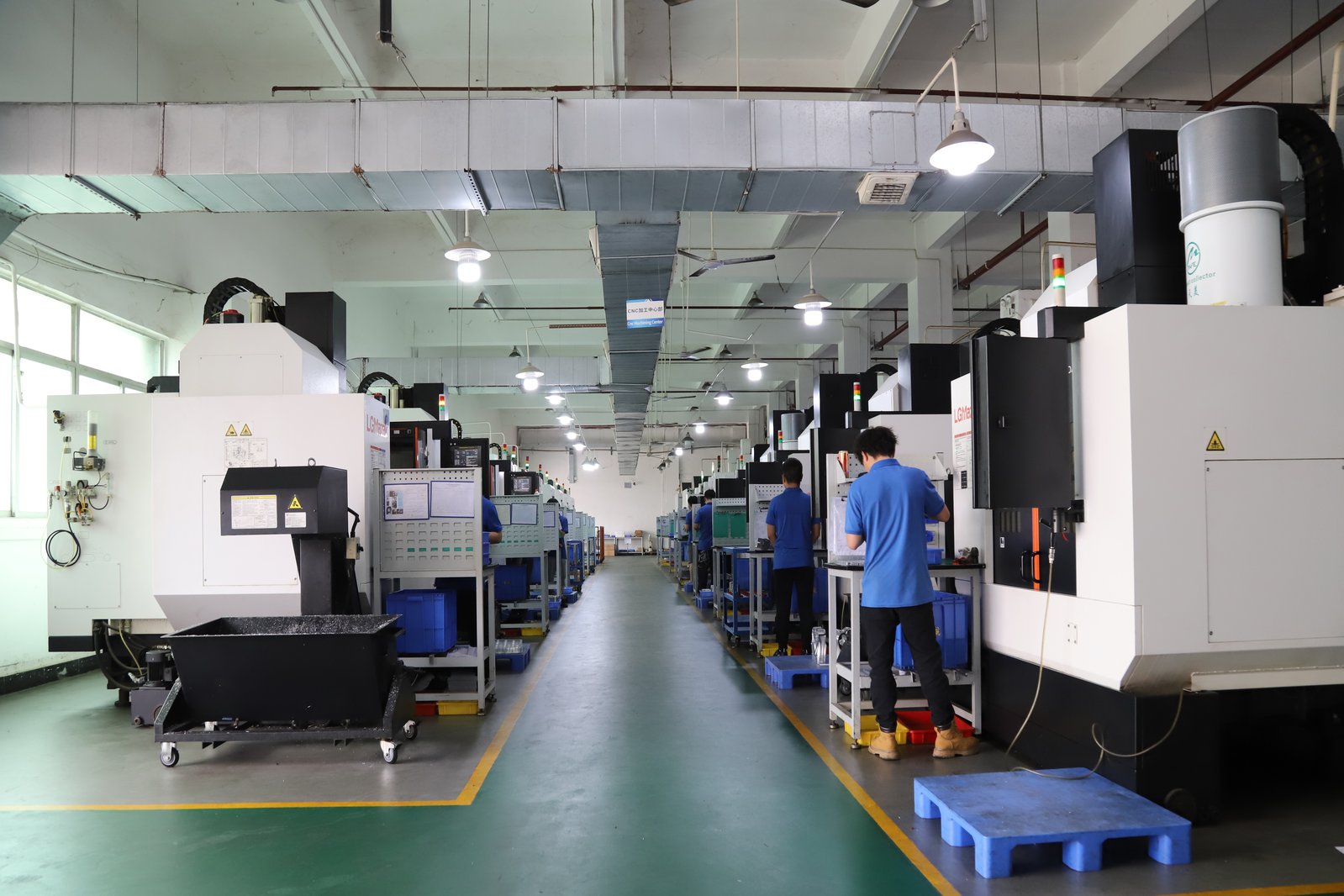
4 axis machining is a three-axis mill with a rotary fourth axis added, and for a large share of real production parts, it is the most cost-effective axis configuration a shop can put behind a drawing. The fourth axis rotates the part so the machine can reach multiple faces, radial features, and circular patterns in one setup, without the re-clamping that costs time and reintroduces error between operations. It is not as flexible as 5-axis machining, and it is not meant to be: 4-axis earns its place on cylindrical and multi-sided parts where a fifth, tilting axis would add machine-hour cost for capability the geometry never uses. This guide covers what the fourth axis actually adds, how to decide between 3, 4, and 5-axis machining, which parts belong on a 4-axis center, and how to verify that a shop's axis claim matches its floor.
What Does a Fourth Axis Actually Add, and When Does It Matter?
A machining center's first three axes — X, Y, and Z — move the tool in three straight lines. Adding a rotary axis lets the work-holding rotate the part about one axis, and that one rotation unlocks three kinds of geometry that a 3-axis machine can only reach with extra setups:
- Multiple faces in one setup. A part with features on four sides — a valve body, a housing, a fitting — can be indexed around so the machine reaches each face without the operator unclamping, flipping, and re-clamping the part. The benefit is not just time; it is accuracy. Every re-clamp is a chance for the part to sit slightly differently, and the error follows the feature that was machined after the move.
- Radial features on cylindrical parts. Cross-holes, ports, flats, and slots spaced around the circumference of a shaft or a cylinder are natural 4-axis work: the part rotates to bring each feature to the tool, and circular pitch patterns hold their spacing from the rotary axis rather than from a layout that can drift.
- Features machined while the part rotates. Helical grooves, cam tracks, and cylindrical interpolation are cut with the fourth axis moving continuously, not just indexing. This is simultaneous 4-axis work, and it is how a machine produces geometry that is genuinely impossible on three axes.
The distinction that matters on a drawing is indexing versus simultaneous. Many "4-axis" jobs only index — rotate, stop, cut, rotate, stop — which is a positioning operation. Others machine while rotating, which is a different class of motion control. A part with radial holes needs indexing; a part with a helical groove needs simultaneous. Asking which one your part needs is the first step in choosing the process.
4-Axis vs 3-Axis: When Does the Extra Setup Cost Outweigh the Extra Axis?
Three-axis machining is the cheapest hour on the floor, and it is the right answer for a large share of prismatic parts — brackets, plates, and housings that can be cut from a handful of orientations with simple fixtures. The question is not whether 3-axis can make the part; it is whether the part can be made accurately and cheaply that way.
The switch to 4-axis pays when a part has features on more than one face and the faces must hold a relationship. Consider a manifold with ports on three sides, where the port spacing matters: machined in separate 3-axis setups, each setup carries its own location error, and the relationship between faces is the sum of every re-clamp. Machined on a 4-axis center in one setup, the rotary axis defines the relationship, and the faces hold their position from the same datum. That is why perpendicularity and cross-face position callouts are the features that justify the axis, not the part's shape, but the tolerances between its faces.
The economics follow the geometry. A simple two-sided bracket may be faster on a 3-axis with two fixtures than on a 4-axis with one program; a four-sided valve body with tight cross-face tolerances is cheaper on a 4-axis because the alternative is a series of 3-axis setups that each add time and each add error. The quote you want from a shop explains which way the decision went on your part, rather than quoting everything on the machine it happens to own.
4-Axis vs 5-Axis: What Does a Part Gain by Going All the Way?
Five-axis machining adds a second rotary axis, letting the tool tilt as well as the part rotate, and with that tilt comes the ability to reach compound angles, undercuts, and freeform surfaces in one setup. It is the most capable configuration in the shop, and it is also the more expensive hour. The engineering question is which parts actually use the fifth axis.
Parts that machine beautifully on 4 axes are the ones whose features all point at, or around, one axis of rotation: a cylinder with cross-holes, a housing with features on four faces, a part with a circular pitch pattern. Parts that need the fifth axis are the ones whose features point in compound directions — a boss angled in two planes, an undercut behind a wall, a sculpted surface where the tool must stay normal to the part. For those, the tilting axis is not a luxury; it is the difference between a machined feature and an impossible one.
The honest middle answer: a large fraction of "5-axis-looking" parts are actually 4-axis parts with a tilted feature or two, and a shop that quotes every such part on a 5-axis center is selling you capability you are not using. A part with one angled feature and a body of radial features may be better made by a 4-axis setup with a single angled fixture than by tying up a 5-axis machine for the whole run. The axis decision is a fit decision, and the cheapest axis count that holds every tolerance is the right one — the same fit logic the process-selection guide on this site applies to the choice between turning, milling, and mill-turn.
Which Parts Belong on a 4-Axis Machining Center?
Four-axis machining is a geometry, not an industry, but the same part families keep appearing because they share the same feature logic. If your part looks like any of these, a 4-axis center is likely the right home:
- Valve bodies, manifolds, and pump housings. Ports, bosses, and sealing faces on several sides, with cross-face position tolerances that a single setup protects.
- Fittings and connectors. Hex bodies, cross-drilled holes, and radial flats on small parts that would otherwise be re-fixtured repeatedly.
- Shafts, couplings, and hubs with radial features. Keyways, cross-holes, and driver features spaced around a centerline, machined with the part rotating to each position.
- Housings and frames with circular pitch patterns. Bolt circles, port circles, and features that repeat around an axis, where the rotary axis holds the spacing.
- Parts with helical or wrapped geometry. Thread-like grooves, cam tracks, and fluid channels that are cut while the axis rotates continuously.
Notice what is not on the list: flat, two-sided parts, and parts whose only complexity is on one face. Those belong on 3-axis, and quoting them on a 4-axis center would just add machine-hour cost. The same judgment applies in the other direction — the moment a part needs compound-angle access or a tilted feature on a curved surface, the conversation moves toward 5-axis. Knowing which family a part is in is the difference between paying for capability and paying for the capability you use.
What Do 4-Axis Tolerances and Setups Look Like on a Drawing?
The drawing discipline for 4-axis work is the same as everywhere on this site — datum scheme first — with one addition: the rotational relationship between features is the whole point, so it has to be controlled and measured as such.
- Control the cross-face relationships with GD&T. If a port on one face must sit in a position relative to a feature on another face, that relationship belongs in the drawing as a position or perpendicularity callout to a common datum, not as two independent dimensions that happen to look right. The datum scheme is what tells the shop which axis and which setup will hold the part.
- Call out circular pitch explicitly. A bolt circle or a set of radial ports spaced at a pitch should be dimensioned as a pitch pattern around the datum axis. That tells the shop the rotary axis is controlling the spacing, which is exactly what a 4-axis setup does well.
- Expect a setup that references the rotary axis. The shop should be able to say how the part's axis is established relative to the rotary axis of the machine — by chuck, by fixture, by probing. If the part axis and the rotary axis are not the same line, the radial features will carry the error.
- Measure off the machine. Rotary positioning is repeatable, but the proof of a cross-face tolerance is a CMM check on the free part, not a reading in the fixture. The tolerance that matters is the one the assembled product sees — the same measurement discipline the quality system behind this facility applies to every axis configuration.
The part itself should follow the usual rules — achievable wall thicknesses, sensible corner radii, tolerances only where function requires them — because a 4-axis setup does not excuse a drawing that fights the tool. What the fourth axis buys is fewer setups and better cross-face accuracy, not freedom from geometry that is difficult to cut.
What Does a 4-Axis Machining Job Cost, and Where Do the Savings Hide?
4-axis machining sits between 3-axis and 5-axis on hourly cost, and its total cost story is almost always a setup story. A machine-hour on a 4-axis center costs more than a 3-axis hour; it costs less than a 5-axis hour. The job is cheaper on 4-axis when the machine-hour premium is smaller than the cost of the extra setups it removes.
- The savings are in setup count and scrap. Every setup you remove is an operator hour, a fixture, and a chance to re-introduce error. A four-sided part that needs four 3-axis setups — or even two — will often be cheaper in one 4-axis setup even at a higher hourly rate.
- The savings are in tolerance yield. Cross-face features machined in one setup hold their relationship from the rotary axis, so they pass inspection instead of becoming rework. On a part where perpendicularity matters, the 4-axis decision is a quality decision as much as a cost decision.
- The costs hide in program and fixture time. A 4-axis setup needs a proper fixture or chuck, a probed axis, and a program that sequences the rotations. On a one-off part, that engineering time can outweigh the setup savings, which is why 4-axis shines on runs where the setup is amortized over more than one piece.
- The comparison has to be like for like. When two shops quote the same 4-axis drawing, confirm they are quoting the same operations: same faces machined, same rotary positioning, same inspection scope. A quote that drops a face or an inspection step is not cheaper — it is incomplete.
The buyer-side rule is the same one that governs the whole axis decision: count the setups your part would need without the axis, and the tolerances between its faces. If the answer is "several" and the tolerances are real, the 4-axis hour is usually the cheapest hour in the job.
How Do You Verify a Machining Supplier's Axis Claim?
"We do 4-axis" is one of the easiest claims in machining to make and one of the easiest to check. The verification is concrete, and it does not require stepping on the floor.
- Ask for the machine list by axis count. A serious shop states its fleet in numbers: how many 3-axis, 4-axis, and 5-axis machines it runs. The facility behind this guide runs 100+ CNC machines — 50+ 3-axis mills, 20+ 4-axis mills, 20+ 5-axis mills, plus turning centers and grinders — in a 6,800 m² plant. An axis claim without a machine count is a brochure.
- Ask which parts run on the 4-axis machines and why. The answer should name geometry — "the manifolds with cross-face position callouts," "the housings with radial ports" — not just "everything." A shop that cannot say why a part belongs on 4-axis has not read the drawing.
- Ask how the rotary axis is set up and verified. Probing the part axis, establishing the rotation center, and verifying the first article against the drawing are the marks of a controlled 4-axis setup. The tolerance evidence is the CMM report on the free part.
- Verify the certificates by number. ISO 9001 and IATF 16949 (product design excluded) claims are auditable by number. Ours are ISO 9001:2015 (No. 116024/A/0001/UK/En), IATF 16949:2016 (product design excluded) (No. 131941/A/0001/SM/En), and ISO 14001:2015 (No. 116024/B/0001/UK/En), held by Dongguan Zhuohang Ltd, founded in 2005.
Ask the same questions of any shop quoting your drawing, and read the factory capability page for the full machine picture. The axis count is a capability statement, and like every capability claim, it is only worth what it can prove.
Frequently Asked Questions
What is 4-axis machining?
4-axis machining is milling on a machine with three linear axes (X, Y, Z) plus one rotary axis that rotates the part. The fourth axis lets the machine reach multiple faces and radial features in one setup, either by indexing the part to fixed positions or by rotating it continuously to cut helical and wrapped geometry.
What is the difference between 4-axis and 5-axis machining?
A 4-axis machine rotates the part about one axis; a 5-axis machine adds a second rotary axis so the tool can tilt as well. The fifth axis is needed for compound-angle features, undercuts, and sculpted surfaces; a 4-axis machine handles cylindrical parts and multi-sided parts whose features point at or around a single axis of rotation.
When should a part go on a 4-axis machine instead of a 3-axis machine?
When it has features on more than one face that must hold a relationship. Each 3-axis re-clamp adds time and position error, while a 4-axis setup machines all the faces from one rotary datum. Cross-face position and perpendicularity callouts are the features that make the axis decision.
What tolerances can 4-axis machining hold?
Machined features hold ±0.003 mm on critical callouts, with precision grinding at ±0.002 mm where bearing and sealing surfaces demand it. Cross-face relationships are verified on a CMM after the part is free of the fixture, and key characteristics are held to Ppk ≥ 1.67 initial.
Does 4-axis machining cost more per hour than 3-axis?
Yes — a 4-axis machine-hour costs more than a 3-axis hour and less than a 5-axis hour. The job is usually cheaper on 4-axis when the machine-hour premium is smaller than the cost of the extra setups and rework it removes, which is why the setup count and the cross-face tolerances decide the economics.
How do I know a supplier can really do 4-axis machining?
Ask for the machine list by axis count, ask which parts run on the 4-axis machines and why, ask how the rotary axis is set up and verified, and ask for the certificates by number. The facility behind this guide runs 20+ 4-axis mills among 100+ CNC machines.
Can you machine a single 4-axis prototype before production?
Yes — MOQ is one piece. Prototypes run on the same machines, tolerances, and documentation as production, so the part and its first-article report are a true preview of the production run rather than a separate, looser process.
Which certifications does the shop hold?
Dongguan Zhuohang Ltd holds ISO 9001:2015 (No. 116024/A/0001/UK/En), IATF 16949:2016 (product design excluded) (No. 131941/A/0001/SM/En), and ISO 14001:2015 (No. 116024/B/0001/UK/En). IATF scope is build-to-print, and the certificates are verifiable by number rather than by claim.
Wondering whether your part earns a fourth axis?
Send the drawing and we will return a quote with the axis decision explained — the setup count your geometry actually needs, and the tolerances that decide it. Email [email protected] or call +86 13126536955.